
One platform, four layers
Phlo does not stop at the language. The same stack that transpiles your code runs your server, provides realtime and messaging, and manages your entire fleet.
The server platform
FrankenPHP runtime
In production a Phlo app runs on FrankenPHP in worker mode: the app stays in memory, requests cost no startup time. Zero dependencies, with 190 bundled resources.
Set up your server → · Production setupPhlo Daemon
The optional engine: a pool of warm workers that runs every Phlo target without startup cost. Phlo Realtime runs on it, as do async-helpers and tasks. Core Phlo works without it.
Daemon manual →Phlo Realtime
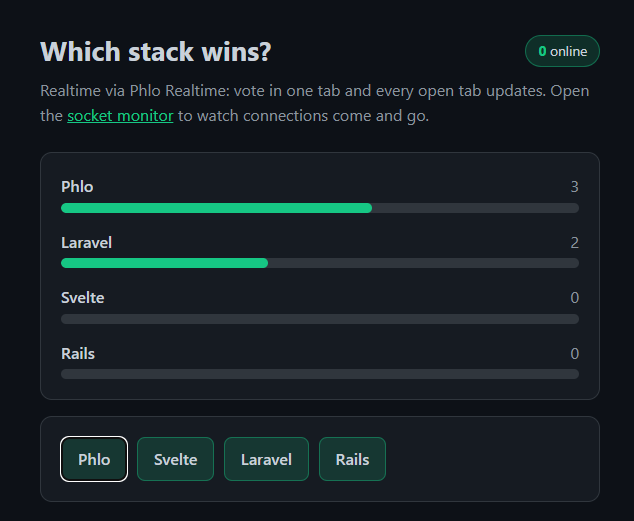
The WebSocket layer built into the Phlo Daemon: one process multiplexes connections across multiple apps and runs each socket event in-process on the worker pool. Your app implements four hooks (wsConnect, wsAuth, wsReceive, wsClose) and broadcasts from PHP with wsCast().
Phlo Realtime manual →Phlo Presentation
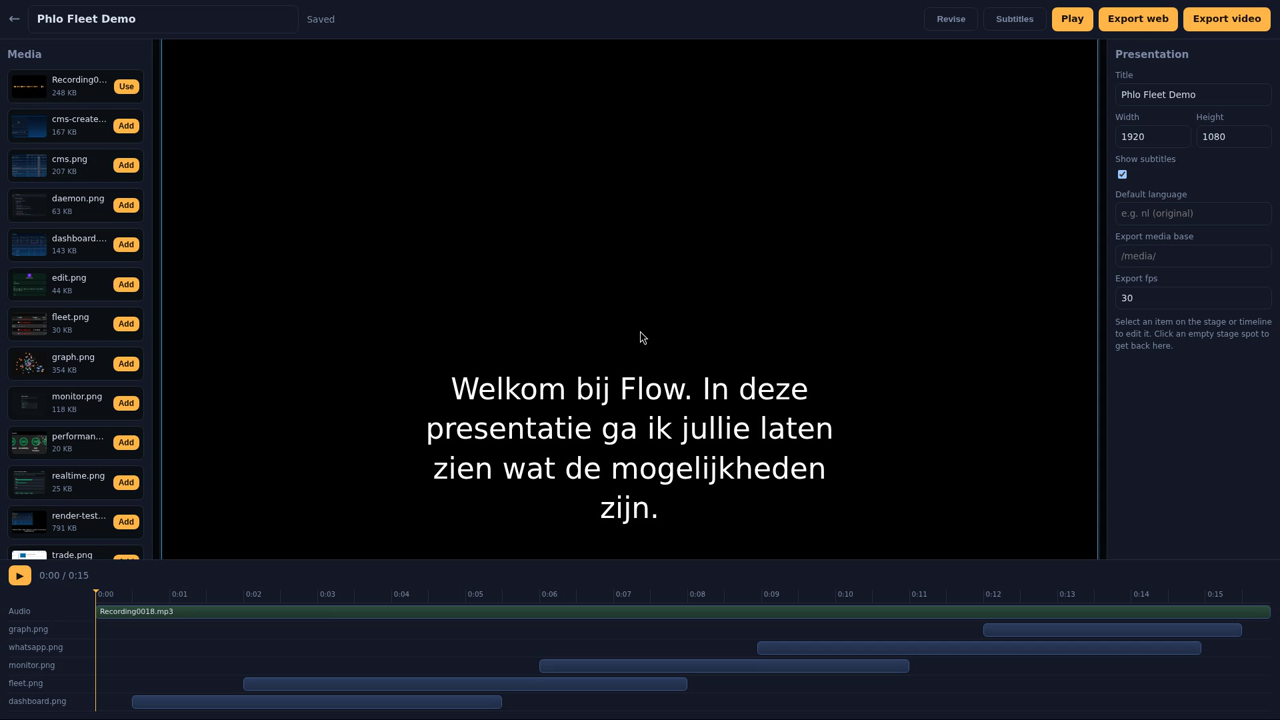
An audio-timeline editor for narrative presentations and videos: transitions and camera moves, Whisper transcription and translation, AI dubbing and an AI director that creates a storyboard from your media library. Export as a static page or client-side MP4.
Presentation manual →Phlo CMS
Schema-driven CRUD: from your models the CMS generates lists, records, forms, uploads and a REST API. Every relationship (parent, child, many) and file uploads included.
CMS builder → · CMS handbookPhlo WhatsApp messaging
A WhatsApp gateway as a separate service: one process per number, incoming messages reach your app through a secured webhook. Mail and notifications run through the same platform layer.
Phlo WhatsApp manual →For agents
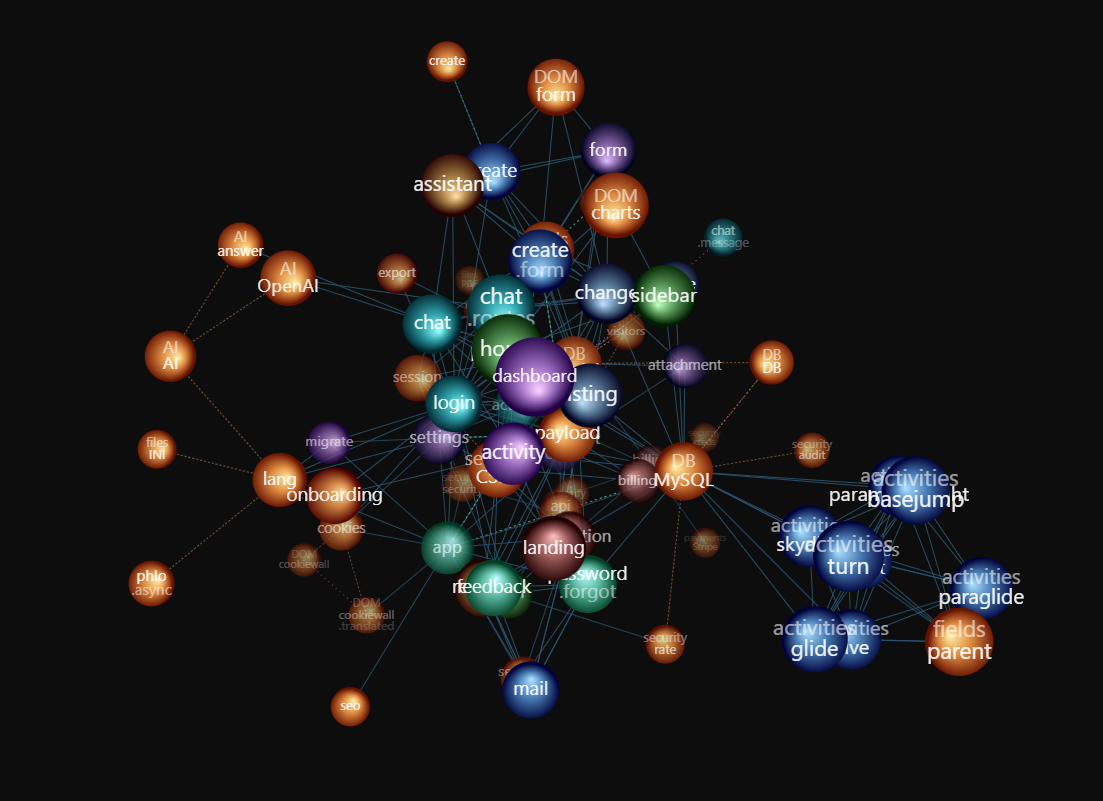
Phlo is designed agent-first: a complete language specification as SKILL.md, machine-readable docs and runtime introspection through reflect.
llms.txt →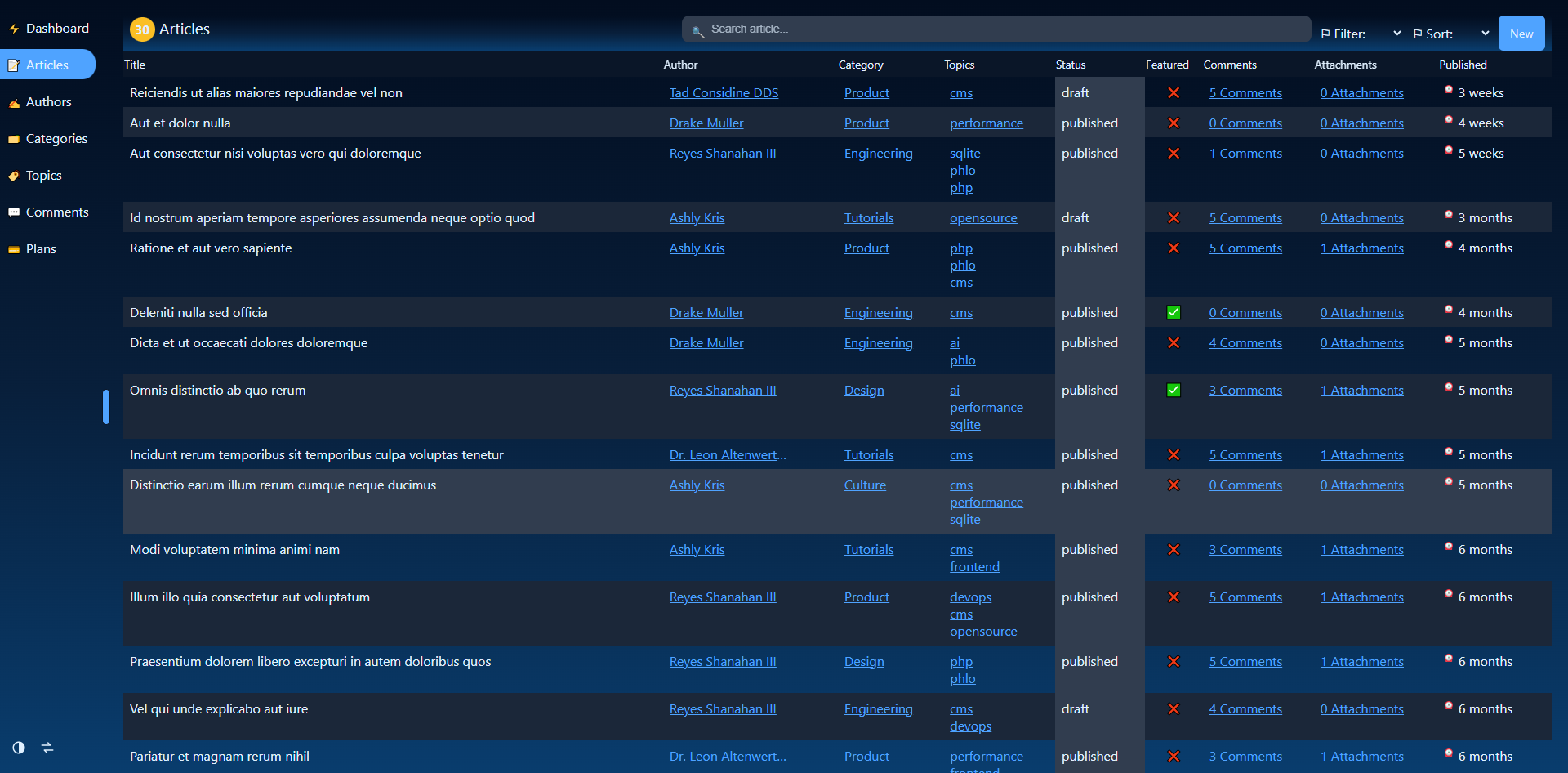
Integrations & payments
Communicating with the outside world is part of the runtime, not a separate SDK. Connectors put external REST APIs under one contract; the payment resources cover Stripe and SumUp.
Connectors
Thin, uniform wrappers around external REST APIs: Slack, Telegram, Twilio, Resend, Google Calendar & Sheets, Microsoft Graph, Exact, Moneybird, e-Boekhouden, Lightspeed, and Shopify. Each call returns the same obj(ok, data, or error) result; OAuth tokens refresh themselves.
Guide: Integrations →Payments
Stripe for Checkout, Billing Portal and webhooks, and SumUp for card-present payments on a Solo reader. Both in the runtime, via the creds you configure.
Guide: Integrations →The operations platform
The Phlo dashboard does not manage a single app but your entire technical architecture: every application, server and domain from one place.
Self-hosted by design: you run Phlo on your own server, in worker mode in memory. The costs scale with a machine, not with each request, so success does not make your infrastructure unaffordable as often happens with cloud and serverless. You own the readable PHP output, your data, and the machine on which everything runs.
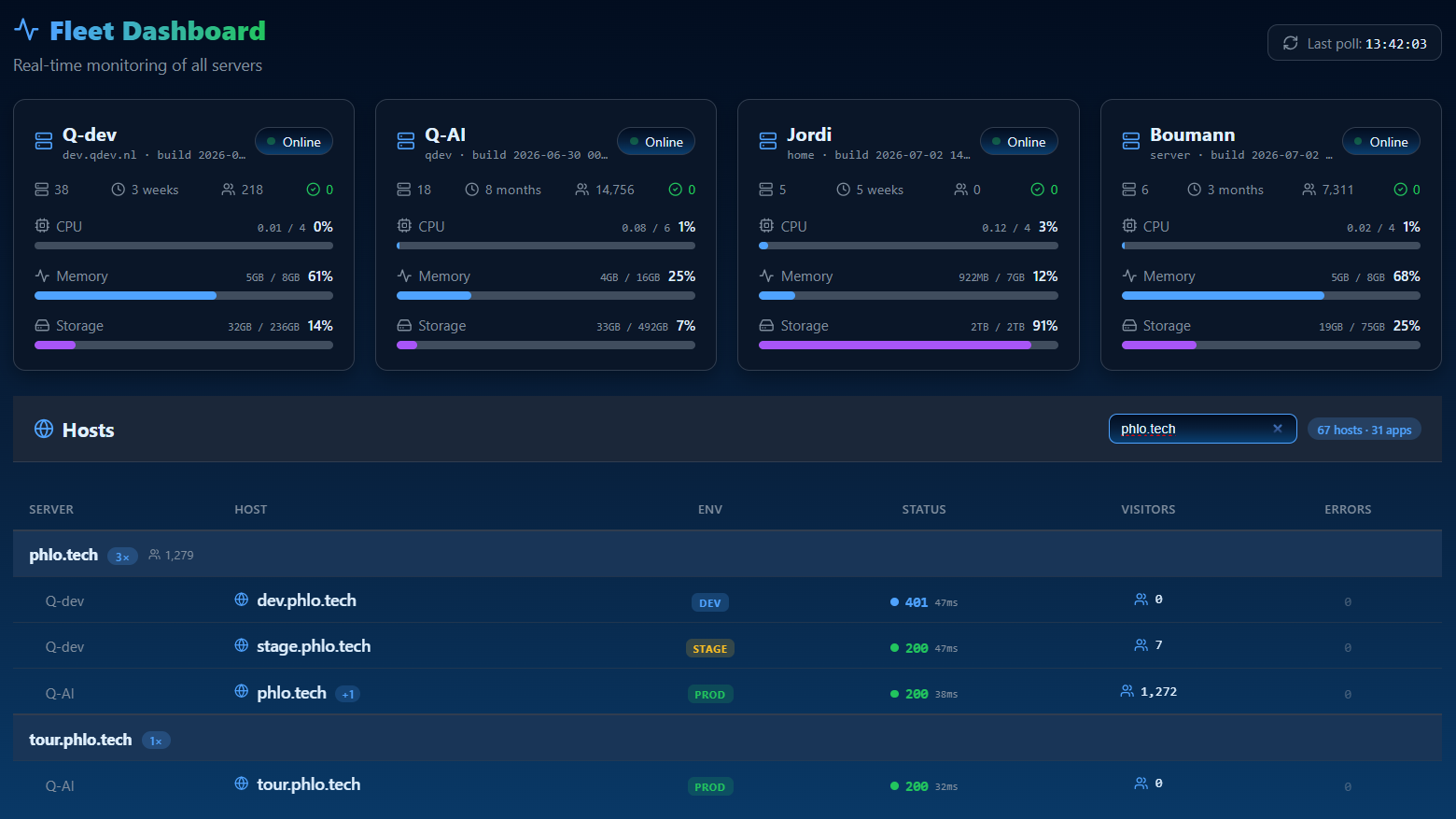
Fleet overview
All apps and servers on one screen: uptime, versions, builds and health.
Domains & databases
Domain management and database administration per app, without separate tooling.
Notifications & visitors
Messages, alerts and visitor statistics across the whole fleet, routed to mail or WhatsApp.